Mineral licks for horses: why and when to offer them
Mineral lyses replenish vitamins and minerals without unnecessary calories, facilitate feeding in the flock and promote saliva production. See when they make sense.

Why Offer Horses Mineral Lice
The availability and quality of bulky feed is a concern for many horse owners today, especially because of the shortage of hay in recent years and more frequent adverse weather. The nutritional value of bulk feed naturally fluctuates and important vitamins and minerals are often significantly reduced when hay is dried. The quality of grass also varies considerably according to soil type, season and plant species. While fortified feedingstuffs can help fill nutritional gaps, mineral lyses are a practical and increasingly popular solution – especially for grazing or herding horses.
Main benefits
The great advantage of mineral lizards is that they are low in calories and affordable. For horses and ponies that are easy keepers, it can be difficult to supplement without increasing energy (calories). The recommended intake of Saracen Pasture Lick® lysine is only 250 g per day for horses weighing 500 kg, which is significantly less than a conventional low calorie balancer. In addition, they give horses free access to vitamins and minerals without the need for further feeding. They are also very practical when feeding in a group. In a herd, it can be difficult to take horses out of the pasture because of bucket feeding – liz allows each horse free access, reduces competition in feeding and saves owners work.
Another important benefit is the licking itself. It promotes saliva production, which is essential for healthy digestion and acts as a natural buffer of stomach acid. Liz is also a diversifier that helps to reduce boredom and promotes natural feeding behaviour, especially in horses with restricted dosage or at rest.
Lizy Saracen Horse Feeds

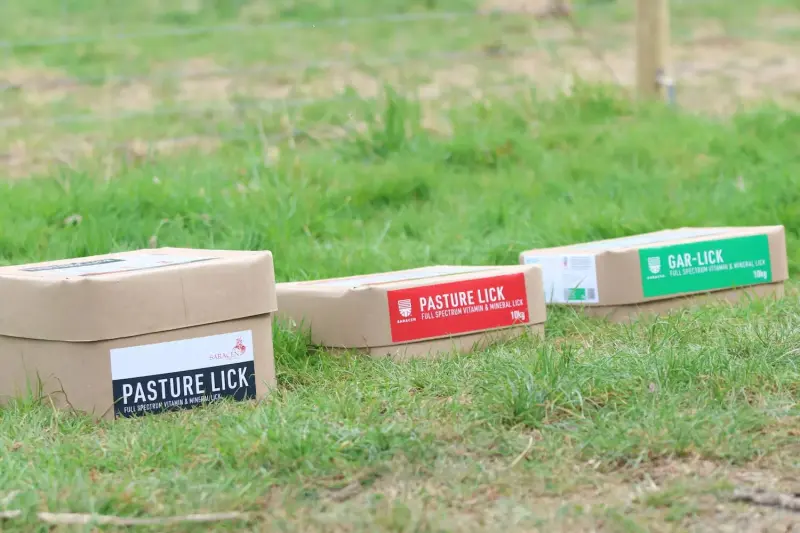
Saracen Horse Feeds offers both the Pasture Lick® lizard and the popular Gar-Lick®. The formula is low in sugar, so at the recommended dosage it is also maladaptive for horses and ponies with a history of metabolic problems. Lizy are intended to be fed with various types of bulky feed and Gar-Lick® contains garlic, which naturally repels insects during the summer months. They're new, and they're wrapped in 100% biodegradable material. The aim is to reduce single-use plastics whilst increasing the safety of horses – eliminating the risk of plastic breaking and creating sharp edges. The packaging is gradually decomposed and can be easily recycled or put into a feed trough. Pasture Lick® is available in packages of 10 kg and 20 kg, making it suitable for large herds with many grazing flocks that get enough calories from grass. Gar-Lick® comes in a handy 10 kg pack and can be placed on pasture or in the barn during insect season.
Conclusion
Mineral lyses are a practical and simple way to promote balanced nutrition in different farming systems. Whether you're supplementing the fluctuating quality of bulky feed, supporting horses on pasture, or simplifying group feeding, they are a reliable source of essential nutrients with no added calories and complications. With additional benefits – digestive stimulation, diversification and labour savings in the stable – they are a valuable aid to modern horse breeding.