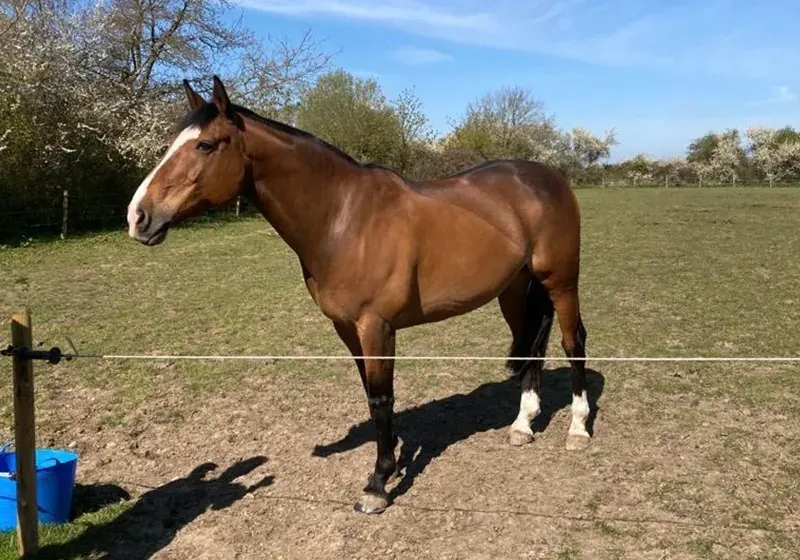
Equine obesity: why we often overlook it and how to tackle it
Studies have shown that 45 to 60% of recreational horses are obese. Why are owners often unaware of the risks and steps to help a horse lose weight?
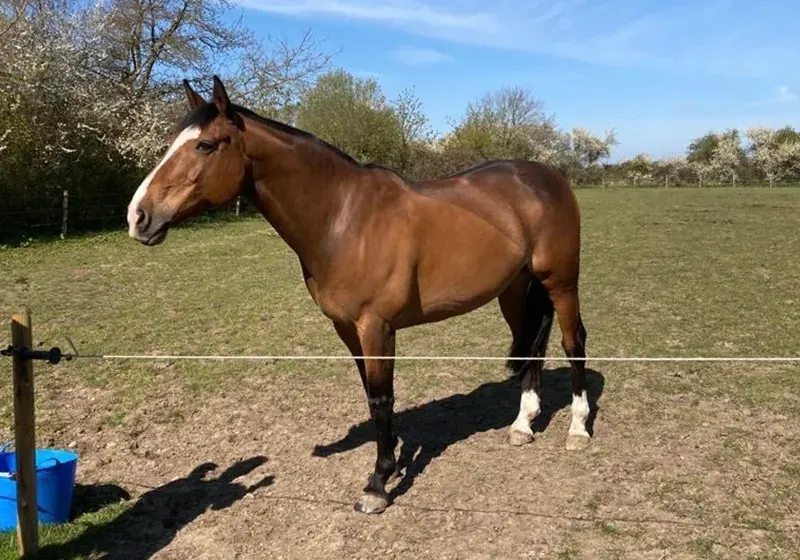
How owners view overweight horses and how to prevent obesity
Obesity is now one of the biggest problems for both recreational and sport horses – Studies show that it affects up to 45-60% of recreational horses. A number of factors contribute to overweight, and the fact that obesity is often viewed as normal in the equine world complicates matters.
While researchers and practitioners are working to raise awareness about optimal fitness, obesity in horses continues to increase and with it the number of horses with associated metabolic diseases such as laminitis or equine metabolic syndrome (EMS).
What Contributes to Horse Obesity
Výzkum ukázal, že majitelé často nedokážou rozlišit nadbytečný tuk od přirozené stavby těla koně. Jensen et al. (2016) uvádějí, že 41,7 % majitelů podceňuje tělesnou kondici svého koně. Týká se to zejména pony a původních plemen, u nichž je nadváha hůře rozpoznatelná. Jedna z respondentek ve studii Furtado et al. (2021) řekla: „Myslela jsem, že je prostě taková stavba, že je to zkrátka pořádný a urostlý kůň.“ To může vysvětlovat, proč je obezita u pony třikrát častější než u koní (Potter et al., 2016).
Some owners are aware of their horse's obesity but do not know all the options to help him lose weight – many report trying everything and with no result (Furtado et al., 2022).
Modern breeding also complicates matters: horses spend more time in the stable and have better access to high-quality bulk and core feed. This has many advantages, but calorie intake may then exceed need. Practical limitations also play a role. In the United Kingdom, for example, around 60% of owners raise horses in pens where they often have no control over the type of bulky feed or access to pasture (Furtado, 2019). Other obstacles are lack of time to move the horse or injury to the horse or rider.
Therefore, it is important to consult a nutritionist who can help you develop a personalized feeding plan and practical weight-loss strategy. However, research suggests that few owners seek professional advice when making feeding decisions. Westendorf et al. (2013) report that out of 242 owners, only 25.5% used a professional – 20.5% consulted a veterinarian and only 3% with a nutritionist.
Why the Perception of Obesity Is Harmful
Another obstacle is how the equine world perceives obesity. Furtado et al. (2021) pointed out that while undernourished horses are associated with terms such as "neglected" or "poor welfare", overweight horses are spoken of in a humorous way. Furtado (2019) also mentions euphemisms such as "in show condition" or "well wintered".
It has become the norm that a horse with higher fitness is perceived as desirable or healthy. This is also reinforced by the media and exhibition competitions where such horses are rewarded, which can distort the idea of ideal fitness.
Despite the eased language, most of those at health risk for obesity are aware of – the risk of clawed feet, impaired insulin regulation and lower performance. However, they often take action only when clinical problems arise. This is why early intervention and awareness-raising on horse weight control are so important.
Existing initiatives
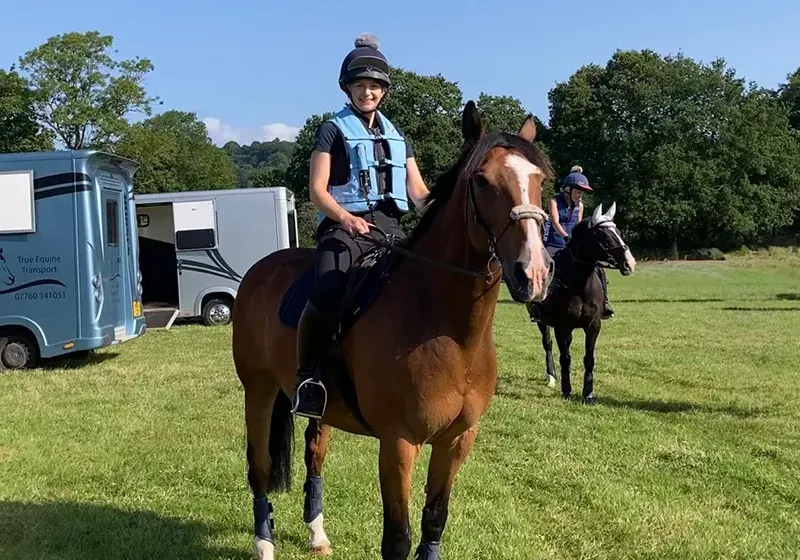
One initiative against obesity in horses is the UK's “Weigh to Win” programme, which was launched by The Horse Trust together with Tamzin Furtado in 2019. Veterinarians work with the judges at exhibitions, evaluating the fitness of horses and rewarding those in the healthiest condition. The goal is to show what the ideal amount of fat looks like, and give owners a clear target.
Saracen Horse Feeds also has a long history of educating people about the proper nutrition and feeding of horses. If you're unsure, contact our team to help you assess the condition of your horse and design a tailored feeding plan.
How to assess and monitor a horse's body fat
- Assessment of fitness: When assessing fat, it is important to touch the horse. We recommend using a nine-point fitness scale every few weeks. By evaluating areas such as the neck, ribs, back and tailbone, you can make informed decisions about feeding, movement, and care.
- Tape measurement: the combination of tape measurement for weight estimation with condition assessment allows you to monitor changes over time.
- Regular photographs: slight changes in the amount of fat may not be noticeable when looking at the horse every day. The photos, along with a fitness assessment and tape measurement, will help to capture even small changes. The horse should stand up straight and always take the picture from a similar angle.
- Consult a nutritionist: Evaluating fitness takes time and practice, so do not be afraid to ask for help.
How to Help Horses Lose Weight
Adjust feeding
- Consult a nutritionist about supplemental and bulk foods.
- Always follow the recommended dosage to ensure that the horse gets enough vitamins and minerals. If you need to reduce your calorie intake, switch to a low-energy diet or a balancer designed for small portions.
Limit grazing
- Reduce grass intake by belt grazing, paddock paradise or rotational grazing.
- Gradually introduce the feeding basket. Do not use it continuously, as this would restrict the intake of bulky feed too much. Put it on during the day and put the horses in a pasture without grass at night or in a stable with late harvest hay or wet hay.
Watch the hay and straw intake
- The intake of bulk feedingstuffs shall not fall below 1.5% by live weight per day (including hay, straw, grass and bulk feed substitutes).
- Use nets or slow feeders to keep the horse eating longer.
- Evaluate the quality of bulk feed. Older, sturdier hay typically has a lower digestive energy than soft, leafy hay. If you're not sure, get a hay analysis done by NIR.
- You can substitute up to 50% of your daily volume feed with oat straw as an extra low-calorie option. Introduce it gradually and do not give to horses and ponies with dental problems or a tendency to use a wheelchair.
- Soak the hay in clean water for at least 1 hour to reduce calories; if necessary, extend the soaking time.
Increase exercise
- Let the horse out with other horses so he can move more and behave naturally.
- If possible, increase the frequency, intensity or duration of movement.
- Set up the stable or gaitway so that the horse has motivation to move.
Allow natural weight loss
- Let the horses naturally lose a little weight in the winter to offset the spring gain from richer pasture.
- Don't cover the horse unnecessarily, blankets reduce natural energy expenditure.
Ask for help
- Research shows that owners who work with others are 45 percent more successful at losing weight. A partner will enhance motivation and accountability.
- Consider a share owner or a professional rider to help move the horse.
- You should contact Saracen Horse Feeds for nutritional advice.