A pony with EMS in practice (case study)
Nutritionist Lizzie Drury describes how she manages her pony Ritu with equine metabolic syndrome: fat storage, regular weigh-ins, timer feedings, soaked hay and 300 grams of Essential Balancer a day.
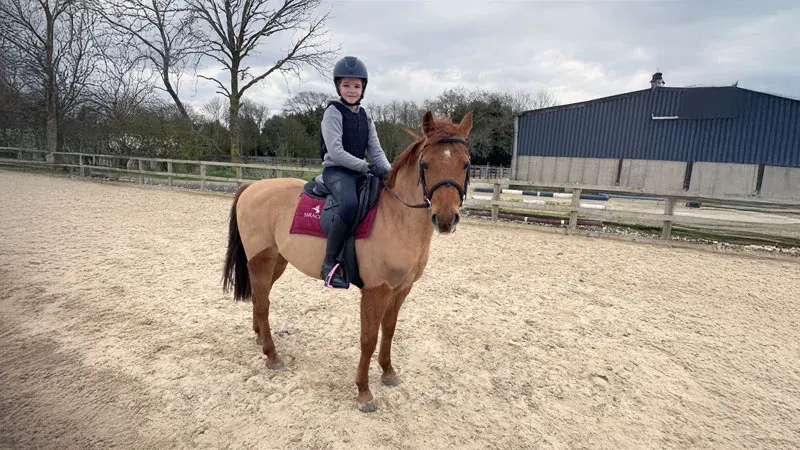
Chief Nutritionist Lizzie Drury explains what to look out for in horses and ponies with equine metabolic syndrome (EMS). It's based on the way he takes care of his pony Rita, whose figure shows very clearly where the fat pillows are stored and which batches are most at risk.
Who Rita is
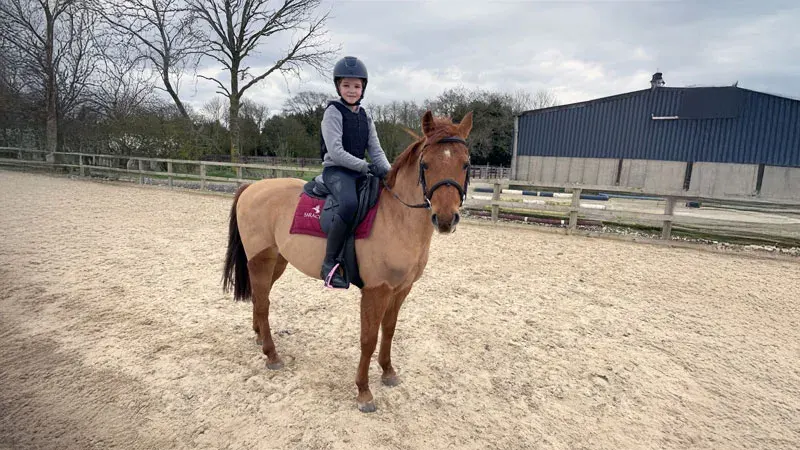
Rita is a fifteen-year-old British riding pony who regularly does light to moderate-demand work – rides, flatwork and jumping.
“Even before we took Rita on, we knew she had equine metabolic syndrome and would need very careful management and regular work. It was a very important decision for us: we committed to strictly controlling her feeding, and above all her grazing time and routine, and to keeping her active so she would never become just a ‘field ornament’. These things have been key to keeping her healthy and – as harsh as it sounds – to keeping her alive! Laminitis can be life-threatening.”
Where fat is stored
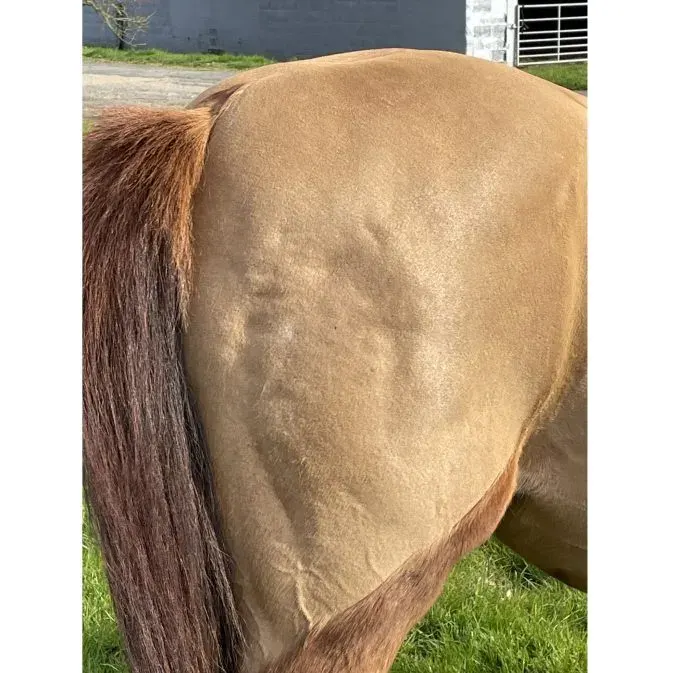
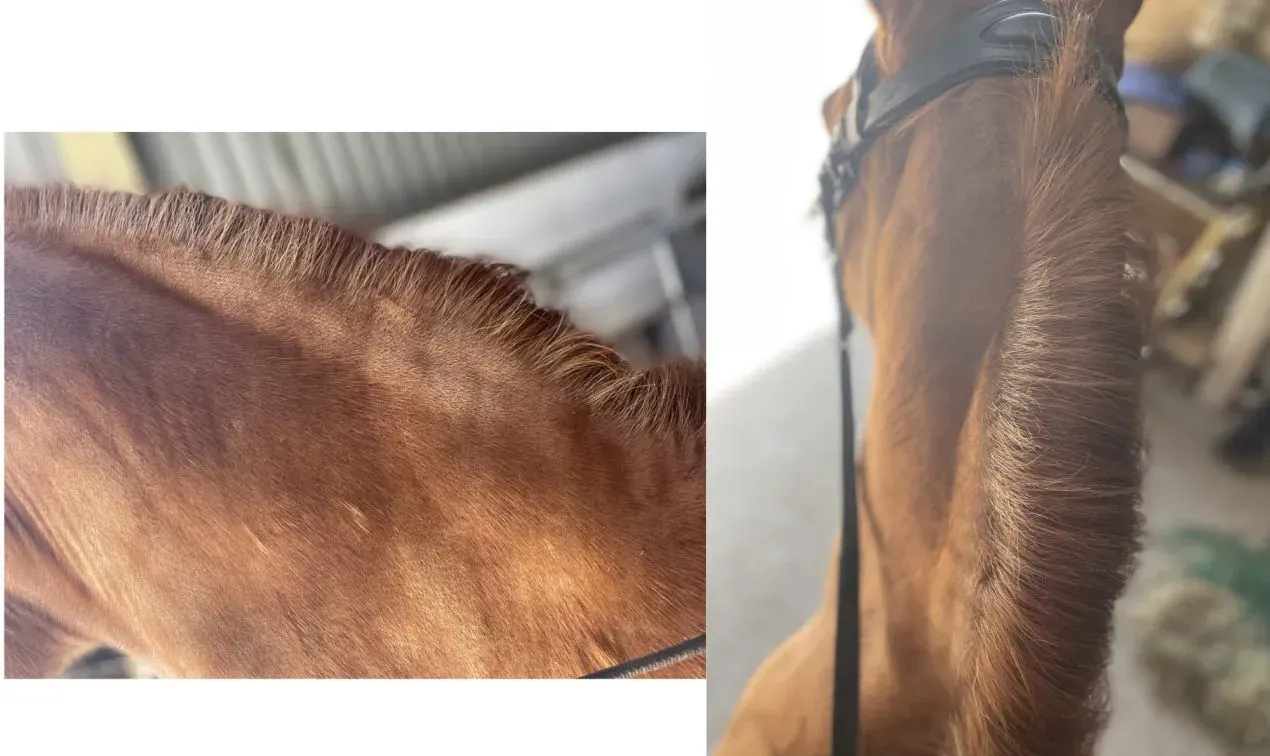
“I took these photos because I think Rita shows the risk areas really well! You can see where she can store fat – over her back and hindquarters (note the ‘dimpling’ where she carried a lot of excess weight in the past).”
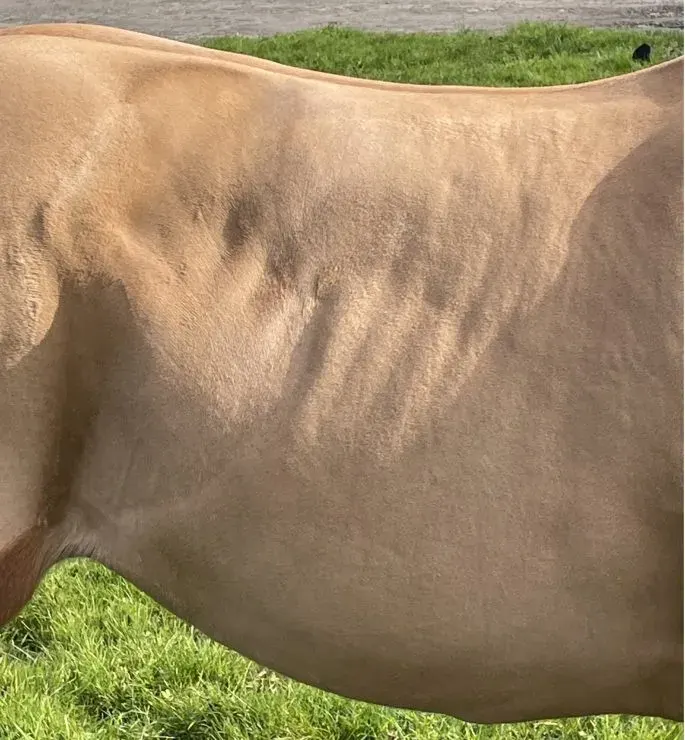
“If she put on weight, she would also develop something like a ‘beer belly’, because she would start storing more metabolically active fat in her abdomen.”
Regular weighing and assessment of condition
“We weigh Rita and condition-score her regularly so we can keep track of any fluctuation. That way we spot weight gain much earlier than if we relied on our eyes alone. It means we can act proactively rather than reactively and adjust her feeding as needed.”
Grazing under control
“We're lucky to have all-weather turnout pens at our yard, so we can turn Rita out while limiting how much grass she eats. Rita is incredibly sensitive to grass – sometimes it seems you can see her crest harden and turn ‘lumpy’ within minutes, and that's an instant alarm! The photos below show how her crest changed after just 15 minutes on this year's spring grass! At this time of year we manage her grazing on a timer: first some time grazing without a muzzle, then some time with a grazing muzzle, and then back into the all-weather pen.”
Hay and feeding
“Rita gets soaked hay all the time. I've noticed that even a spell on dry hay was sometimes enough to cause changes in her fat pads. And since in practice it isn't possible to have every batch of hay analysed for water-soluble carbohydrates (WSC), we routinely soak her hay for up to 12 hours and rinse it before feeding.”
As a young pony, she's already quite energetic and can be sharp, so nuclear feeding is easy! She doesn't need a nuclear feed to keep herself fit or work, but she needs a good balancer so that she has a balanced diet and gets the nutrients that hay can't give her. He gets 300 grams a day. Essential Balancer, mixed with a small handful of molasses-free chaff so she eats more slowly and chews properly.”
Every day, all year long
“Ponies with EMS are demanding in terms of care and it has to be a daily, year-round process!